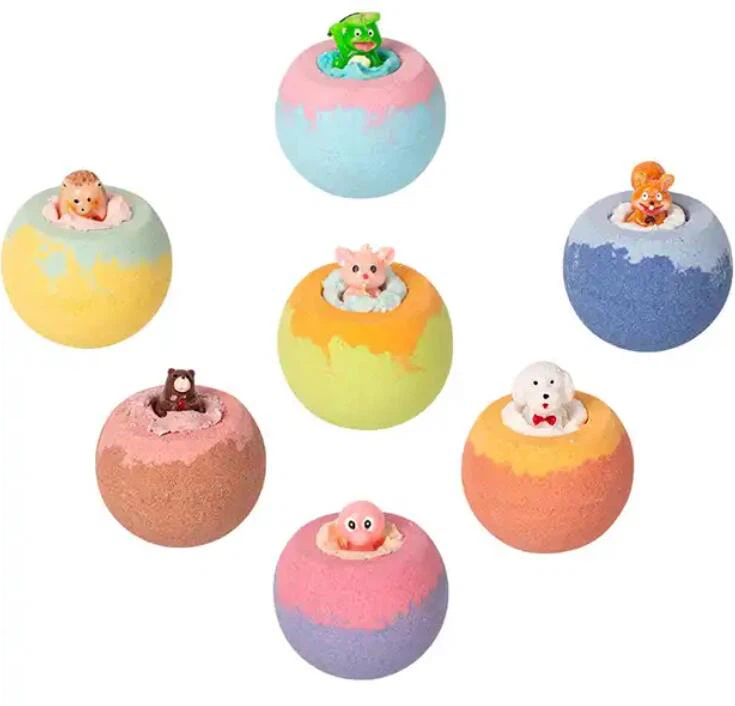
After 29 years formulating personal care products, I still use bath bombs at least twice a week. But I also know exactly which ones I would never touch. That distinction matters far more than any clickbait headline declaring them "toxic" or "perfectly safe." The truth lives in the middle—it depends on what's inside that fizzing sphere and who's soaking in it.
Below, I'll walk you through the chemistry, the real risks, and a practical framework for choosing bath bombs that are genuinely safe for your skin.
What Actually Happens When a Bath Bomb Touches Your Skin
That satisfying fizz is simply citric acid reacting with sodium bicarbonate to produce carbon dioxide, water, and sodium citrate. The reaction itself is close to neutral and non-irritating. Many people panic at the word "acid," but citric acid is consumed during the reaction—it doesn't linger on your skin causing damage.
Dilution is another overlooked factor. A standard bath bomb weighs 100 to 200 grams and dissolves in roughly 150 liters of water. The actual concentration of any single ingredient reaching your skin is far lower than what you'd apply via a serum or moisturizer.
Healthy skin sits at pH 4.5 to 5.5. A dissolved bath bomb typically shifts bathwater to pH 6 to 7.5. This mild alkaline shift is temporary—most people's acid mantle recovers within an hour. You only need to worry when a formula pushes pH above 8.0, or when your skin barrier is already compromised.
Which Ingredients Can Actually Cause Skin Problems
Synthetic fragrance tops my watch list. A single "fragrance" on the label can represent 50+ undisclosed compounds. IFRA regulates 26 known allergens, but not every manufacturer follows concentration limits strictly. Linalool, limonene, coumarin—these are the most common culprits behind bath bomb skin irritation. If you react to perfume, you'll likely react to heavily fragranced bath bombs too.
With artificial colorants, cosmetic-grade dyes (with CI numbers) and craft-store pigments are entirely different things. FD&C Red No. 40 and D&C Yellow No. 10 are approved for skin contact but can still sensitize reactive individuals. I've seen brands use non-cosmetic-grade colorants to cut costs—that's a clear red flag.
Some bath bombs include SLS to create a luxurious foam layer. The effect looks great, but SLS is a well-documented barrier disruptor. For dry or sensitive skin, it's an entirely unnecessary addition. Milder surfactants like cocamidopropyl betaine deliver foam without the irritation.
Traditional polyester glitter is essentially microplastic debris. Beyond environmental harm, these tiny particles cause physical friction irritation, especially in sensitive areas. Plant cellulose and mica-based alternatives have been mature for years—there is no reason to use polyester glitter anymore. As for preservatives, anhydrous bath bomb formulas theoretically don't need them, but if a product contains botanical extracts or is manufactured in humid conditions, microbial growth becomes a real concern. Phenoxyethanol or ethylhexylglycerin are far safer choices than DMDM hydantoin.
Who Needs to Be Extra Careful
People with compromised skin barriers—such as eczema sufferers—can be triggered by even mild alkaline shifts and low-concentration fragrance. Bath bombs suitable for sensitive skin should be fragrance-free, dye-free, and contain barrier-repair lipids, no exceptions.
Anyone with vaginal health concerns should also pay attention. Dyes, fragrance, and pH disruption can all alter vaginal flora. I always recommend rinsing with clean water after a bath bomb soak. Intimate-area reactions are more common than most people admit, but entirely preventable with the right product choice.
Children's skin is 20% to 30% thinner than that of adults, and they possess a higher ratio of body surface area to body weight; this means their skin absorbs various ingredients at a significantly faster rate than an adult's. Consequently, for children, I recommend only those products formulated without fragrances or dyes, and featuring an extremely minimalist ingredient list. Furthermore, for skin currently recovering from chemical peels, laser treatments, or severe sunburns—situations where the skin barrier is already compromised—any potential risks are significantly amplified. Therefore, it is absolutely imperative to strictly avoid the use of bath bombs until such skin has fully healed. As a professional with in-depth knowledge of product ingredients, I have established exceptionally rigorous standards for the formulation of our company's bath bombs, ensuring that every batch of raw materials is both safe and fully traceable.
How to Choose a Truly Safe Bath Bomb
First rule: ignore the word "natural." Poison ivy is natural too. Go straight to the INCI ingredient list—fewer ingredients you can actually recognize is better. If you're sensitive, avoid CI color index numbers entirely.
Third-party dermatological testing means an independent lab verified skin compatibility—that's completely different from a brand claiming its product is "gentle." If you're seriously evaluating a product, ask to see the test report. Formulas containing shea butter, coconut oil, jojoba oil, or sweet almond oil help counteract the mild drying effect of sodium bicarbonate. A good bath bomb should leave skin softer, not tighter.
Finally, manufacturing standards determine end-product safety and often matter more than any single ingredient choice. GMP-certified facilities, ISO systems, documented quality control processes—these are things consumers can't see but will always feel.
How to Use Bath Bombs the Right Way
Keep soak time under 20 minutes. Prolonged immersion over-hydrates the stratum corneum and weakens barrier integrity. Rinse with clean water afterward to remove residual dyes, fragrance molecules, and surfactants—this step is non-negotiable for sensitive areas.
Apply moisturizer within three minutes of stepping out, while skin is still damp, to lock in hydration and accelerate lipid barrier recovery. Always patch-test new products—inner forearm, wait 24 hours. One simple step can spare you a full-body reaction.
For storage, humidity degrades citric acid and prematurely activates the fizzing reaction. Keep bath bombs in a cool, dry place to preserve both performance and safety.
The Formulation Gap—Where Safety and Risk Diverge
The difference between pharmaceutical-grade sodium bicarbonate and industrial-grade comes down to impurity levels: heavy metals, insoluble matter, moisture content. After 29 years in formulation, I can tell you that cheap raw materials eventually create expensive problems.
Production environment matters equally. Uncontrolled facilities introduce allergens, microbial loads, and batch inconsistency. Consumers never see the factory floor, but they always feel it when something goes wrong.
Accelerated stability testing simulates months of shelf life in just weeks. Brands that skip this step face batch inconsistency and customer complaints. I've watched beautiful formulas fall apart at month three simply because no one tested fragrance-oil-to-base compatibility.
The market is moving toward fragrance-free, dye-free, hypoallergenic options—and that's a good thing. The pool of people who can safely enjoy bath bombs is expanding, and the brands winning market share tend to have manufacturing partners flexible enough to produce niche product lines without sacrificing quality control.
Conclusion—Enjoy the Soak, Skip the Risk
Bath bombs are not inherently your skin's enemy. The real variables are formulation quality and manufacturing standards—not the product category itself. Choose the right product, use it correctly, and your skin won't complain.
If you're building your own bath and body care line or sourcing reliable suppliers for retail shelves, the gap always comes down to the people and facilities behind the formula. GMP-certified production, transparent ingredient traceability, and flexible custom formulation capabilities aren't nice-to-haves—they're the baseline for long-term brand survival.
Want to see what responsible manufacturing actually looks like? Whether you're launching a new brand or curating for retail, see how Poleview supports brands—compliant, customizable formulation systems designed for real skin safety.
FAQ
Q: Can bath bombs cause rashes or allergic reactions?
A: Yes, but reactions typically stem from fragrance, colorants, or SLS—not the fizzing reaction itself. If you experience redness or itching, use patch testing and elimination to identify the specific trigger.
Q: Can sensitive skin types use bath bombs?
A: Absolutely—provided the formula contains no synthetic fragrance, artificial dyes, or harsh surfactants. Look for short INCI lists and barrier-repair oils.
Q: Can bath bombs cause yeast infections or UTIs?
A: Fragrance and dyes can disrupt vaginal pH and flora. Always rinse after soaking, and choose fragrance-free, dye-free options if you're prone to infections.
Q: Are bath bombs safe for children?
A: Standard adult formulas may be too harsh for children's thinner skin. Choose products specifically designed for kids—fragrance-free, dye-free, and dermatologically tested.If you would like to learn more about the safety of bath bombs for children, please click to read our blog:Are Bath Bombs Safe For Kids?
Q: What is the MOQ for custom orders?
A: Stock formulas start at 1000 pieces. Fully customized formulations (new scent, new shape mold) start at 3,000 pieces. We also support mixed-SKU orders to help you diversify your product line efficiently.
Q: Which certifications do you hold?
A: Our facility is FDA-registered, ISO 2276:2007 certified, GMPC/GMP compliant, and SMETA audited. We provide full documentation packages for customs clearance in the US, EU, UK, and Australia.